For anyone decoding synthetics
Acrylic in clothes: fake wool, knits, and shedding
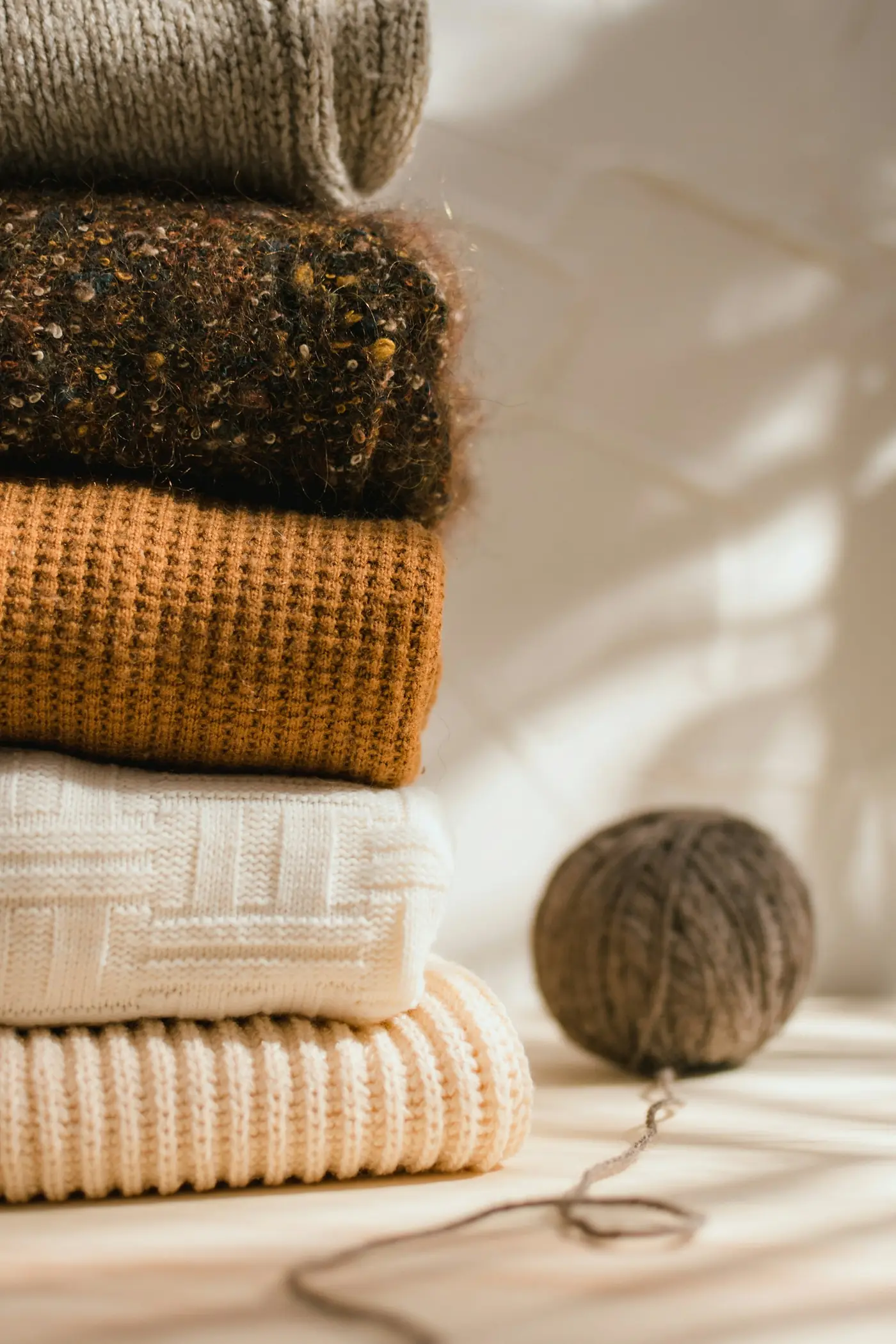
Acrylic is a plastic fibre used to mimic wool in jumpers and knits. We read it as Prefer less. Wash studies often find higher microfibre release from acrylic staple knits than from some other synthetics. Wool-look copy is not a fibre name.
Why it matters for your body
Acrylic is a plastic fibre made mostly of acrylonitrile. US labelling uses that generic name when the polymer is at least 85% acrylonitrile units (16 CFR 303.7). The usual job in a wardrobe is fake wool: jumpers, hats, cheap knits that look lofted and warm without the animal fibre.
That loft is the body issue. Acrylic is often cut as staple fibre so it can mimic wool’s short lengths. Staple synthetics tend to shed more fibre fragments than long filament yarns. A systematic review of textile parameters flags acrylic as an exception among synthetics: used as a wool stand-in, chopped to staple, lower tenacity than nylon or polyester, and higher fragment release in several wash studies (Han, McQueen and Batcheller, Textiles, 2024).
The best-known wash estimate put a 6 kg acrylic load at on the order of 700,000 fibres, more than the polyester and polyester-cotton loads in the same experiment (Napper and Thompson, Marine Pollution Bulletin, 2016). Later knit-fabric work ranked acrylic highest for combined wash-and-dry microplastic release among acrylic, polyester, and nylon (Choi et al., Polymers, 2022). Construction still matters. Loose knits and worn pieces shed more (Carney Almroth et al., Environmental Science and Pollution Research, 2018).
Warmth against skin is the other half. Acrylic can feel insulating and a bit sweaty. It is not wool. It does not become wool because the hangtag says “wool-look.”
Have a knit sweater nearby? Check a product.
The public read: Prefer less
We name the wearer-facing verdict. We do not publish internal weights. See the scoring method for what the Fashion Health Score looks at.
Acrylic: Prefer less.
Prefer less means: treat an acrylic jumper as a plastic knit, not as a wool substitute that happens to be cheaper. Recycled acrylic, when you see it, is still acrylic.
Fake wool is a marketing hand, not a fibre class
Wool is keratin. Acrylic is polyacrylonitrile. Mixing a little wool into an acrylic-dominant knit does not rewrite the majority fibre. If the loft is the selling point, check whether the generic name is wool, acrylic, or a blend, then read the percentages in order.
Acrylic spinning can use the same family of aprotic solvents as some elastane processes. That is mill chemistry (ECHA). OEKO-TEX and GOTS remain process and limit checks. That check does not raise a TFD health number, and they do not turn acrylic into wool (OEKO-TEX Standard 100), (GOTS).
For the broader synthetic picture, polyester is the bulk fibre; acrylic is the knit that pretends to be wool.
What to look for on the label
- Acrylic, polyacrylic, or “acrylic wool mix”: read the percentages, not the vibe.
- High loft knits, brushed hands, and cheap jumpers: extra shed attention in the wash.
- A wool minority in an acrylic-majority garment is still an acrylic garment.
- House names that sound pastoral. Map them back to the generic class.
How to read a clothing label covers generic names versus marketing copy.
A 60-second table
| On the label | Practical read | Public fibre language |
|---|---|---|
| High % acrylic | Plastic staple fibre. Common in fake-wool knits | Prefer less |
| Acrylic / wool blend, acrylic majority | The loft is mostly plastic | Prefer less |
| Brushed or very loose knit | Construction can raise shed attention | Prefer less |
| “Wool-look”, “cashmere-feel” | Marketing hand. Find the generic name | Not a tier |
| GOTS or OEKO-TEX badge | Process and limit checks | Not a health-number raise |
Scan a piece you already own
Pull a winter knit from the drawer. If the composition says acrylic, scan it and compare with a wool or cotton jumper you already wear. Cleaner brand defaults live on the brand directory.
Sources
- 16 CFR 303.7. Generic names and definitions for manufactured fibers, including acrylic.
- Han J., McQueen R. H., Batcheller J. C. (2024). From Fabric to Fallout: A Systematic Review of the Impact of Textile Parameters on Fibre Fragment Release. Textiles, 4(4), 459–492.
- Napper I. E., Thompson R. C. (2016). Release of synthetic microplastic fibres from domestic washing machines: Effects of fabric type and washing conditions. Marine Pollution Bulletin, 112, 39–45.
- Choi S., Kwon M., Park M.-J., Kim J. (2022). The Effect of the Physical and Chemical Properties of Synthetic Fabrics on the Release of Microplastics during Washing and Drying. Polymers, 14(16), 3384.
- Carney Almroth B. M. et al. (2018). Quantifying shedding of synthetic fibers from textiles; a source of microplastics released into the environment. Environmental Science and Pollution Research.
- European Chemicals Agency. Supporting document on NMP, DMF and DMAc, noting DMAc use in acrylic fibre spinning.
- OEKO-TEX. STANDARD 100: textiles tested for harmful substances, with limit values by skin-contact class.
- Global Organic Textile Standard. The Standard. Processing standard for certified organic natural fibres.