For anyone decoding stretch
Elastane, spandex, Lycra: why a little stretch still counts
Elastane is stretch polyurethane. We read it as Prefer less even at 5–10%. Production uses solvents such as DMAc and DMF, with clothing residue limits in some markets. A small percentage still counts on a wearer-facing label.
Why it matters for your body
Elastane is the stretch plastic. On labels it is elastane, spandex, or Lycra. US rules define spandex as a manufactured fibre that is mostly segmented polyurethane (16 CFR 303.7). A few percent is enough to make jeans recover and underwear stay put. That is why it sits on skin all day even when cotton or nylon takes the headline percentage.
“A little stretch” is still a plastic line. Two percent and twenty percent are different garments, but both are stretch polyurethane next to the body. Skipping the last number because it looks small is how a cotton tee quietly becomes a cotton-plastic blend. Call the percentage out.
Making that fibre usually means dissolving polyurethane in an aprotic solvent such as dimethylacetamide (DMAc) or dimethylformamide (DMF) and dry-spinning it. Those solvents are restricted in EU consumer clothing above a set residue limit (Commission Regulation (EU) 2018/1513). ECHA has described DMAc as a spinning solvent for elastane and acrylic fibres, with possible residuals in some finished articles (ECHA, aprotic solvents in textiles). Labs test for those residues because they can remain, not because every pair of leggings is a solvent spill (RISE, solvent residues in textiles).
This page will not invent a blood level from a 5% waistband. It will say what is solid enough to shop with: elastane is plastic, production chemistry is real, and a small percentage still counts in a wearer-facing read.
Have a stretchy tee or leggings nearby? Check a product.
The public read: Prefer less, even at 5–10%
We do not publish internal score math here. The high-level method lives on the scoring method.
Elastane, spandex, Lycra: Prefer less, even at 5–10%.
Prefer less does not mean throw out every stretch jean. It means do not treat “only 5%” as a free pass. If you are choosing between a woven cotton trouser and the same cut with elastane, the stretch line is a plastic you can see. Fit is a real tradeoff. It is still Prefer less.
Solvents and additives are process chemistry
DMAc and DMF are tools in the mill, not fibre names on the hangtag. REACH sets clothing limits because residuals can show up in textiles, including polyurethane coatings and elastane. OEKO-TEX Standard 100 includes solvent-residue testing among its substance limits (OEKO-TEX Standard 100). That is a limit check. It does not raise a TFD health number, and it does not turn elastane into cotton.
GOTS is a processing standard for organic natural fibres. A GOTS mark on a cotton-elastane blend does not rewrite the stretch line (GOTS). Read both percentages.
What to look for on the label
- The actual percentage, not whether stretch is mentioned in the product title.
- House names: Lycra is usually elastane. Map it back.
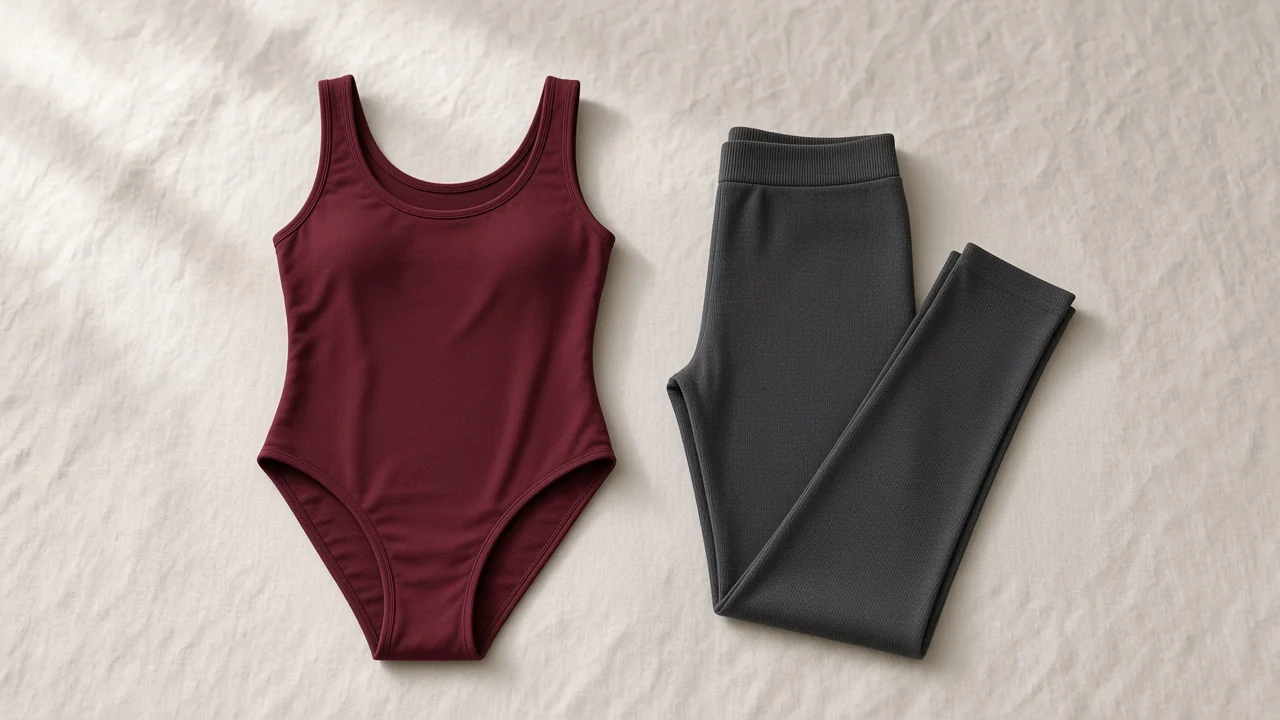
- Where it sits. Underwear and leggings put stretch on skin for hours.
- The rest of the stack. Cotton plus 5% elastane is not the same as nylon plus 20% elastane, or polyester plus stretch.
A 60-second table
| On the label | Practical read | Public fibre language |
|---|---|---|
| Elastane / spandex / Lycra 5–10% | Stretch polyurethane. Small share, all-day skin in many cuts | Prefer less |
| Elastane 1–4% | Still a plastic line. Write the number down | Prefer less |
| High % elastane (leggings, shapewear) | Stretch is the main material, not a rounding error | Prefer less |
| Cotton / linen + elastane | Breathable majority with a stretch plastic | Judge both lines |
| OEKO-TEX / GOTS on a stretch blend | Process and residue limits. The elastane is still elastane | Not a health-number raise |
Scan a piece you already own
Pick a jean, a pair of underwear, and a knit. Note the elastane percentage, then scan the composition. For cleaner brand defaults, see the brand directory.
Sources
- 16 CFR 303.7. Generic names and definitions for manufactured fibers, including spandex.
- Commission Regulation (EU) 2018/1513. REACH Annex XVII restriction on certain CMR substances in clothing and textiles, including DMF and DMAc residue limits.
- European Chemicals Agency. Q&A supporting document on NMP, DMF and DMAc, noting DMAc use in elastane and acrylic fibre spinning and possible residuals in articles.
- RISE. Analysis of solvent residues (NMP, NEP, DMAc, DMF) in textiles, including elastane manufacture.
- OEKO-TEX. STANDARD 100: textiles tested for harmful substances, including solvent-residue limits.
- Global Organic Textile Standard. The Standard. Processing standard for certified organic natural fibres.