For anyone decoding synthetics
Recycled polyester is still plastic
Recycled polyester is still polyester, a plastic that sheds microfibres in the wash. We read it as Prefer less, bottle stories included. Feedstock is not a new fibre. GRS checks recycled content and processing. It does not raise a health number.
Why it matters for your body
Recycled polyester is still polyester. The chip may come from bottles, from factory offcuts, or from old textiles. The fibre in the shirt is the same family of plastic US labels already call polyester (16 CFR 303.7). Our polyester guide reads the fibre as Prefer less. This page is the recycled claim, which is where the marketing works hardest.
It sheds. Laundry is a known route for microfibres from synthetic clothes into water, and public agencies already treat textile fibres as a real part of that problem (OECD, 2021). A controlled wash comparison of knitted fabrics found the recycled polyester knits released more fibre than the virgin polyester knits in that setup (Özkan and Gündoğdu, Journal of the Textile Institute, 2021). Other comparisons find the gap depends on how the cloth is built, and that moving from virgin to recycled polyester does not, by itself, reduce fibre loss. You do not need the studies to agree on “more” or “the same” to use them. Both describe a plastic that still sheds.
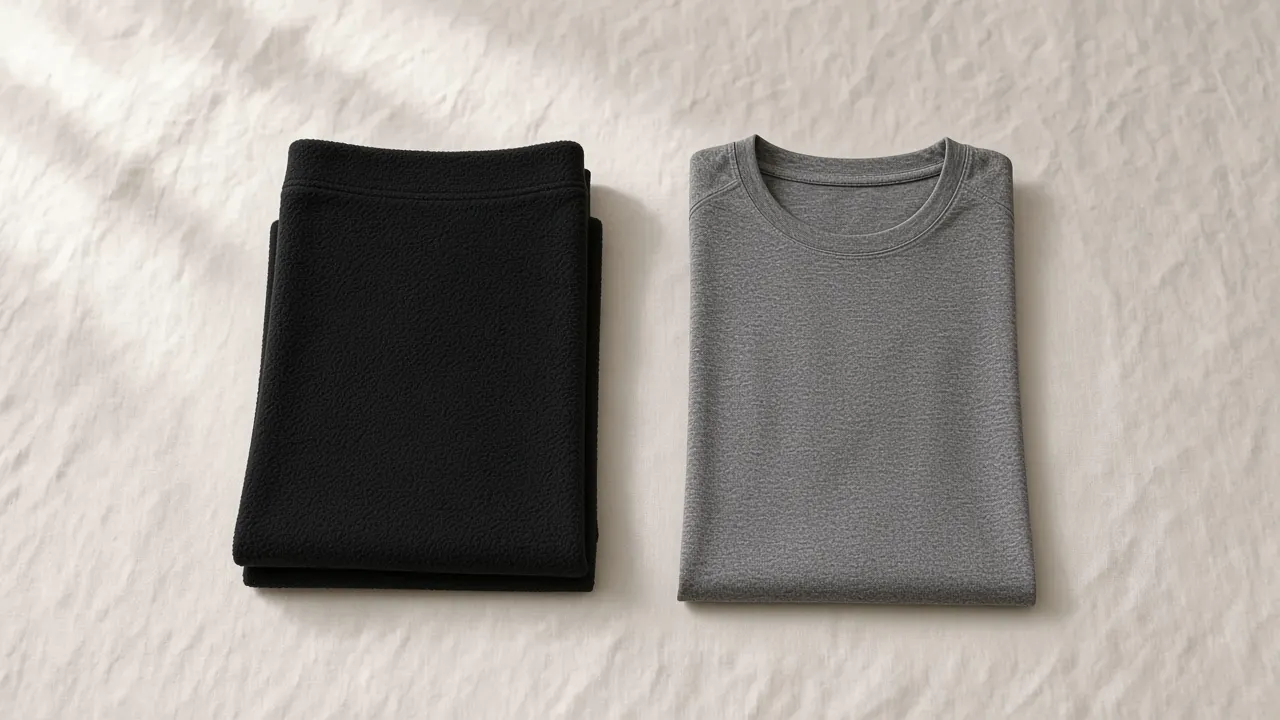
Next to skin, heat, and sweat, that is a different exposure than a recycled bottle that never became a shirt. Fleece, gym kit, and school uniforms are the usual all day cases.
Have a fleece or gym shirt nearby? Check a product.
The public read: Prefer less
We name a public verdict and leave the internal math unpublished. The high level method is on the scoring method.
Recycled polyester: Prefer less. Still plastic. Still sheds microfibres.
Prefer less means: when you have a choice for clothes that live on skin, look for something else. Keep the rain shell if it is the tool that works. Do not read a bottle story, an ocean plastic story, or a “recycled” prefix as a skin upgrade. Bio based polyester is still polyester. The feedstock changed. The polymer did not. Most polyester is made with an antimony catalyst, and recycled polyester carries that over. Bottle and textile feedstock can also bring legacy contaminants, so recycling does not make the chemistry cleaner.
A recycled standard is not a skin upgrade
The Global Recycled Standard tracks recycled content and adds environmental, social, and chemical requirements at certified sites (Textile Exchange, GRS). That can be a serious chain of custody. It does not turn polyester into a natural fibre, and it does not raise a TFD health number. The lighter recycled content mark is the same idea with a narrower scope: it tells you material was recycled. It does not tell you the shirt became something else.
OEKO-TEX Standard 100 tests an article for harmful substances and sets limits by skin contact (OEKO-TEX Standard 100). Useful, and still a limit check. It does not raise a TFD health number. GOTS is a processing standard for certified organic natural fibres (GOTS). Polyester is not one of those fibres. A nearby GOTS hangtag is not a polyester bonus.
Finishes and the other plastic
Water resistant and stain resistant claims are a finish question on top of the fibre. They are not cancelled because the polyester was recycled. Activewear recycled polyester is often paired with elastane, which is Prefer less on its own, and sometimes with nylon. Three plastics can share one “made from bottles” sentence. Read the composition.
What to look for on the label
- Recycled polyester, rPET, or polyester from bottles: still polyester. Prefer less.
- Ocean plastic or textile to textile polyester: feedstock. Prefer less.
- Bio based polyester: still the same polymer. Prefer less.
- GRS or a recycled content mark: chain and process. Not a health number raise.
- OEKO-TEX: substance limits. Not a health number raise.
- Elastane or nylon in the same garment: more plastic lines, each Prefer less.
How to read a clothing label is the short decode when the hangtag leads with the bottle.
A 60-second table
| On the label | Practical read | Public fibre language |
|---|---|---|
| Recycled polyester, rPET | Plastic fibre. Bottles or waste as feedstock | Prefer less |
| Virgin polyester | Same polymer, different chip | Prefer less |
| Recycled polyester fleece or gym kit | All day skin contact, and it sheds | Prefer less |
| GRS or OEKO-TEX | Recycled chain, or substance limits | Not a health number raise |
| With elastane or nylon | More than one plastic | Prefer less, each line |
Scan a piece you already own
Paste a product URL or type the composition into Toxic Fashion Detector. A fleece or a running shirt will teach the label faster than a product story. For cleaner brand defaults, browse the brand directory.
Sources
- 16 CFR 303.7. Generic names for manufactured fibres, including polyester.
- OECD (2021). Policies to Reduce Microplastics Pollution in Water: Focus on Textiles and Tyres.
- Özkan İ. and Gündoğdu S. (2021). Investigation on the microfiber release under controlled washings from the knitted fabrics produced by recycled and virgin polyester yarns. The Journal of The Textile Institute.
- Textile Exchange. Global Recycled Standard (GRS). Recycled content, plus environmental, social, and chemical requirements at certified sites.
- OEKO-TEX. STANDARD 100: textiles tested for harmful substances, with limit values by skin contact class.
- Global Organic Textile Standard. The Standard. Processing standard for certified organic natural fibres.