For anyone who wears silk
Silk in clothes: natural fibre, dye and finish caveats
Silk is a natural protein fibre. We read it as Better choice. Dye, finish, and any weighting still count, including metallic salts used to add weight. Peace silk and organic silk are process claims. OEKO-TEX checks limits. It does not raise a health number.
Why it matters for your body
Silk is a natural protein fibre spun by silk insects. European fibre names define it that way, and nothing else gets to borrow the word (EU textile fibre names, Annex I). It is not a plastic. A blouse, a slip, or a pillowcase can sit on skin for hours, which is why the fibre is worth reading carefully instead of filing under “natural, so done.”
The fibre itself is rarely what bothers skin. A dermatology review of textile contact dermatitis puts the usual cause on the substances added to give a cloth its colour or its performance, not on the yarn (Svedman, Engfeldt, and Malinauskienė, Current Treatment Options in Allergy, 2019). Silk takes dye readily. That is a feature of a protein fibre, and it is also the caveat. A rich colour is not evidence the dyehouse was strict.
A small number of people react to silk proteins. That is real, and it is not the common case. Finished fashion silk has usually had its gum washed off so the cloth can shine and take colour. If a piece still feels sticky, it has not had that step. Neither story turns silk into polyester, and neither story means you can ignore the finish.
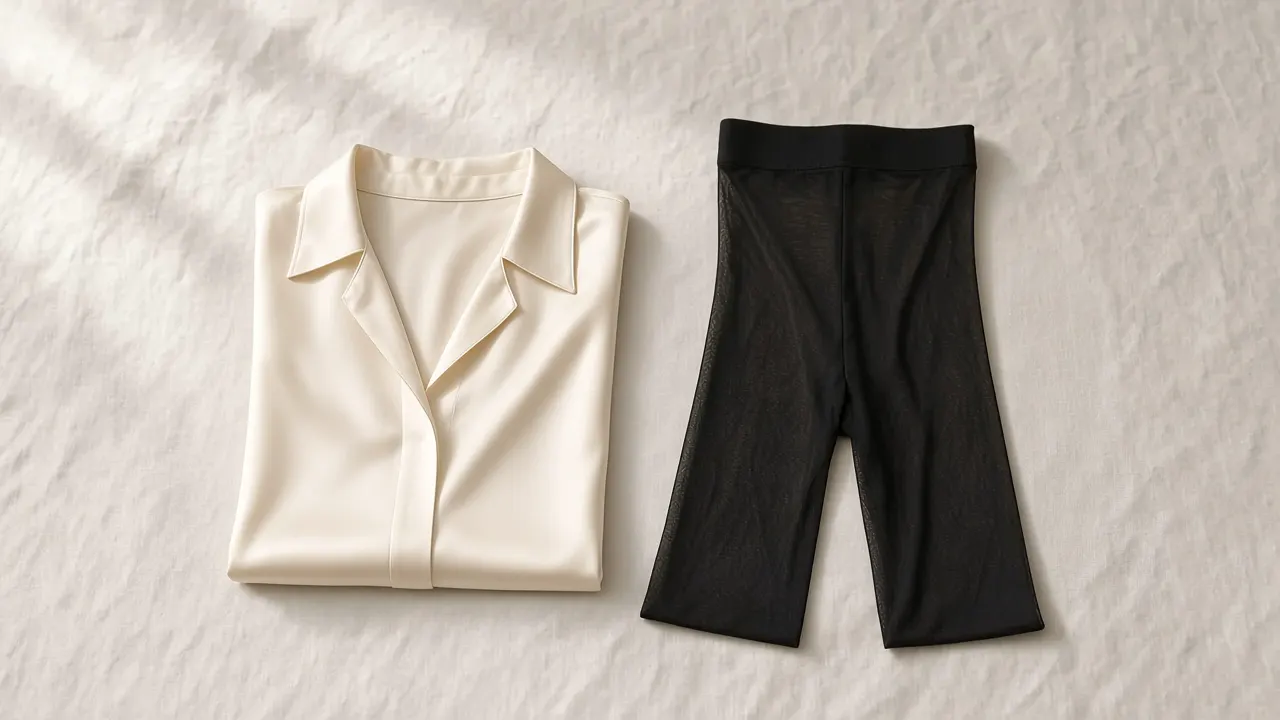
Have a silk blouse nearby? Check a product.
The public read: Better choice
We name a public verdict and leave the internal math unpublished. The high level method is on the scoring method.
Silk: Better choice. A natural protein fibre. Dye, finish and any weighting still count.
Better choice is the fibre. Silk is a real natural protein fibre, pleasant on skin for many people, and a fair choice when the cloth is plainly made. It is not a free pass. Dye, finish, and any weighting still count. “Natural” does not retire those.
What the caveats actually are
Colour is the first one. Protein fibres are dyed in ways cellulosic fibres are not, and the finished colour can still carry residues if the mill was sloppy. OEKO-TEX Standard 100 tests articles for harmful substances, including groups of dyes, and sets tighter limits where skin contact is more intense (OEKO-TEX Standard 100). That is a limit check. It does not raise a TFD health number, and it does not turn a silk polyester blend into silk.
Finish is the second. Softeners, easy care coatings, and “wrinkle free” language sit on top of the fibre. Read them the way you would on cotton. A peace silk or organic silk claim is a process and animal welfare story about how the fibre was produced. GOTS, where it applies, is a processing standard for certified organic natural fibres (GOTS). It checks that chain. It does not raise a TFD health number.
Some silk is weighted with metallic salts, often tin, to add drape and weight back after the gum is washed off. Ask, or look for a lab report, on very heavy, cheap silk.
Care is a separate line
Some silk is labelled dry clean only. That is a care instruction, not a property of the protein. When the label allows a gentle wash, you skip a solvent step. When it does not, the solvent is part of living with that piece. Either way, the fibre name on the content label is still silk.
Watch the blend. Silk with elastane is a natural fibre plus a stretch plastic. Silk with polyester is two stories. Read each line. A house name that means “silky hand” is not silk unless the generic name says so.
What to look for on the label
- Silk: the insect protein fibre. Public read: Better choice.
- Peace silk, organic silk, or a GOTS mark: process claims. Still read dye, finish, and weighting.
- OEKO-TEX: a substance limit check. Not a health number raise.
- Dry clean only: a care step. Not a second fibre.
- Silk with polyester or elastane: read the other line on its own page.
- Satin, charmeuse, or “silk touch” with no silk percentage: a weave or a mood, not a fibre.
How to read a clothing label keeps house names from standing in for generic ones.
A 60-second table
| On the label | Practical read | Public fibre language |
|---|---|---|
| Silk | Natural protein fibre. Dye, finish and weighting still count | Better choice |
| Organic or peace silk | How it was produced. Not a chemistry upgrade | Better choice, then the process claim |
| Silk with elastane or polyester | Two fibres. The plastic line is its own read | Read both lines |
| Silk touch, no silk named | Hand feel marketing | Find the generic name |
| GOTS or OEKO-TEX | Process and substance limit checks | Not a health number raise |
Scan a piece you already own
Paste a product URL or type the composition into Toxic Fashion Detector. A slip or a blouse you wear on skin is the useful test. For cleaner brand defaults, browse the brand directory.
Sources
- Regulation (EU) No 1007/2011, Annex I. Silk is defined as fibre obtained exclusively from silk secreting insects.
- Svedman C., Engfeldt M., Malinauskienė L. (2019). Textile Contact Dermatitis: How Fabrics Can Induce Dermatitis. Current Treatment Options in Allergy.
- OEKO-TEX. STANDARD 100: textiles tested for harmful substances, with limit values by skin contact class.
- Global Organic Textile Standard. The Standard. Processing standard for certified organic natural fibres.