For everyday shoppers
Hemp in clothes: a plant fibre worth knowing
True hemp is a bast plant fibre, in the same family of cloth as linen. We read it as Better choice. Hemp viscose is a different process. Dye, finish, and any elastane still count. Certifications check process and limits. They do not raise a health number.
Why it matters for your body
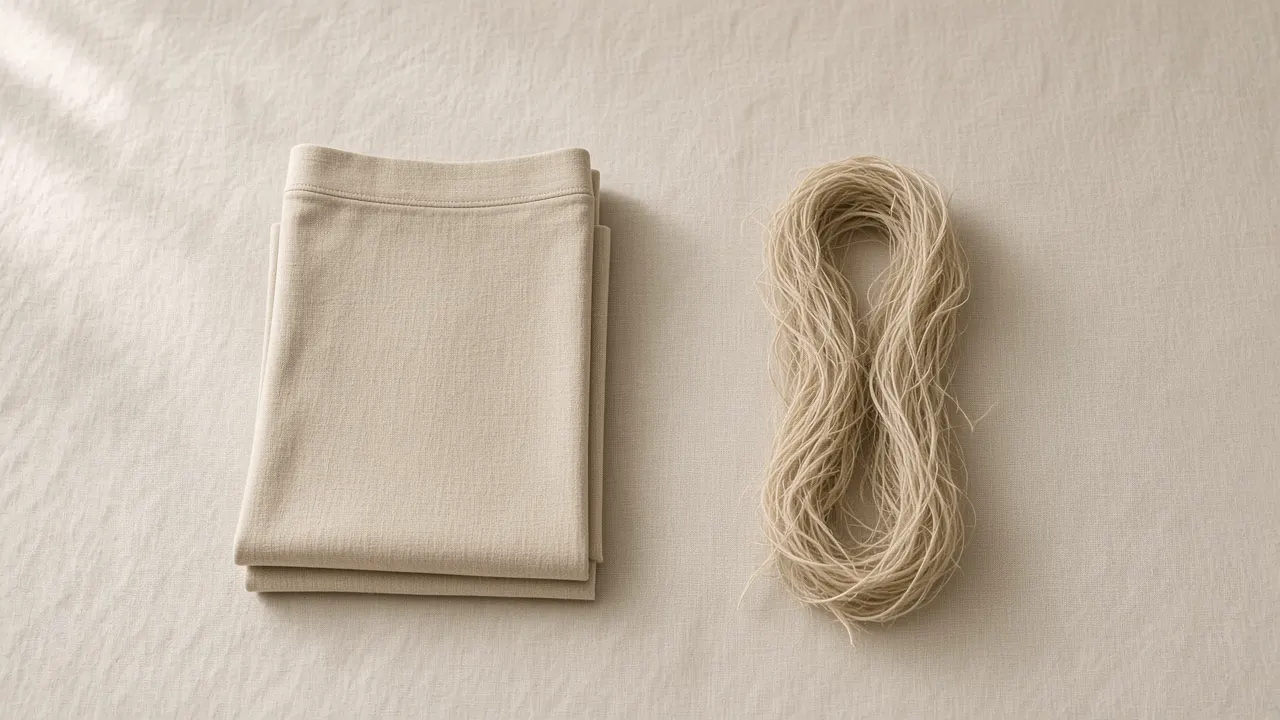
Hemp cloth is a plant fibre from the stalk of the hemp plant. European fibre names call that strand true hemp, and they keep it separate from Manila hemp, which is a different plant (EU textile fibre names, Annex I). Think of it as linen’s neighbour: long fibres from the bark of the stem, spun into yarn.
On skin it behaves like other plant cloth. Air moves through it. A new piece can feel crisp, then soften with washing and wear. That hand comes from how the fibre was freed from the stalk. A review of hemp for textiles treats retting, the step that loosens the fibre from the woody core, as the point that decides how even the yarn can be (Zimniewska, Materials, 2022). Crisp is not a warning. It is unfinished softness.
The hangtag trap is a different fibre using the plant name. Hemp viscose or hemp rayon is pulp that has been dissolved and spun again. That is the viscose process. If the generic name is actually lyocell, read the lyocell page. This page is the bast fibre only.
Have a hemp shirt nearby? Check a product.
The public read: Better choice
We name a public verdict and leave the internal math unpublished. How a composition becomes a Fashion Health Score is described at a high level on the scoring method.
True hemp: Better choice.
Better choice means the bast fibre is a sound default for clothes that sit on skin. It is not a medical claim, and it is not a promise that the dyehouse was gentle. Farm marketing often calls hemp a lower input crop than conventional cotton. That can be a real difference in the field. It still does not describe the finish on the shirt in your hand.
Dye, finish, and the stretch line
Hemp takes dye, and it can be given the same easy care finishes as cotton: wrinkle resistance, stain resistance, extra softener. Those are finish questions. A water resistant or stain resistant claim is where you slow down, on hemp the same as on any other plant cloth.
GOTS can cover organic hemp because it is a processing standard for certified organic natural fibres (GOTS). OEKO-TEX Standard 100 tests an article for harmful substances and sets limits by how much skin contact the product is meant to have (OEKO-TEX Standard 100). Useful checks. Neither badge raises a TFD health number. A GOTS mark does not erase an elastane line, and an OEKO-TEX mark does not turn hemp viscose into bast hemp.
Blends are normal. Hemp with cotton is still plant cloth, and you read both names. Hemp with elastane is a plant fibre plus a stretch plastic. The hemp line can stay Better choice while the elastane line stays Prefer less.
What to look for on the label
- Hemp, or true hemp: the bast fibre. Public read: Better choice.
- Hemp viscose or hemp rayon: dissolved pulp. Read the viscose page.
- Lyocell made from hemp pulp: a solvent spun fibre. Read the lyocell page.
- Cotton or linen next to the hemp: a plant blend. Still check finishes.
- Elastane, spandex, or Lycra: a separate plastic line.
- GOTS or OEKO-TEX: process and limit checks, not a health number raise.
How to read a clothing label is the short version when the hangtag is mostly adjectives.
A 60-second table
| On the label | Practical read | Public fibre language |
|---|---|---|
| Hemp, true hemp | Bast plant fibre, a neighbour of linen | Better choice |
| Hemp with cotton or linen | Plant blend. Hand depends on the yarn | Better choice, then finishes |
| Hemp viscose or hemp rayon | Dissolved pulp, not bast fibre | Read the viscose page |
| Hemp with elastane | Plant fibre plus stretch plastic | Read both lines |
| GOTS or OEKO-TEX | Process and substance limit checks | Not a health number raise |
Scan a piece you already own
Paste a product URL or type the composition into Toxic Fashion Detector. Start with the shirt you actually wear. For cleaner brand defaults, browse the brand directory.
Sources
- Regulation (EU) No 1007/2011, Annex I. Textile fibre names, including true hemp as the bast fibre of hemp, kept separate from Manila hemp.
- Zimniewska M. (2022). Hemp Fibre Properties and Processing Target Textile: A Review. Materials.
- Global Organic Textile Standard. The Standard. Processing standard for certified organic natural fibres.
- OEKO-TEX. STANDARD 100: textiles tested for harmful substances, with limit values by skin contact class.