For anyone decoding rayon
Viscose and rayon, including bamboo viscose
Viscose and rayon are regenerated cellulose from the classic viscose process, including most bamboo viscose. We read them as Be careful. The plant on the hangtag is not the chemistry in the mill. Lyocell is a different process. Certifications check limits. They do not raise a health number.
Why it matters for your body
Viscose and rayon, in clothes, are the same family. European fibre law uses viscose for regenerated cellulose made by the viscose process (EU textile fibre names, Annex I). US labels use rayon as the generic name, and allow viscose when that process was the one used (16 CFR 303.7). The cloth can be lovely: fluid dresses, soft linings, bamboo labelled tees. The plant on the hangtag is not the chemistry in the mill.
The classic route treats pulp with alkali, reacts it with carbon disulfide so it will dissolve, then spins it in an acid bath. Carbon disulfide is the occupational story. Workers in viscose production are the people exposure guides name, not shoppers wearing a finished blouse (ILO encyclopaedia, viscose rayon), (ATSDR, carbon disulfide). A finished fibre is regenerated cellulose. Residues depend on the mill. Shoppers usually cannot see the mill, which is why the public read stays careful for the commodity process rather than turning into a claim about every shirt.
Bamboo viscose is this process with bamboo as the plant source. US rules say you may call it rayon or viscose made from bamboo. You may not call it bamboo unless it is fibre taken straight from the plant, which mass market apparel almost never is (FTC, bamboo textiles). Claims that the finished rayon kept bamboo’s antimicrobial magic are the sort of claim the FTC has told sellers to drop. Soft, yes. A different fibre, no.
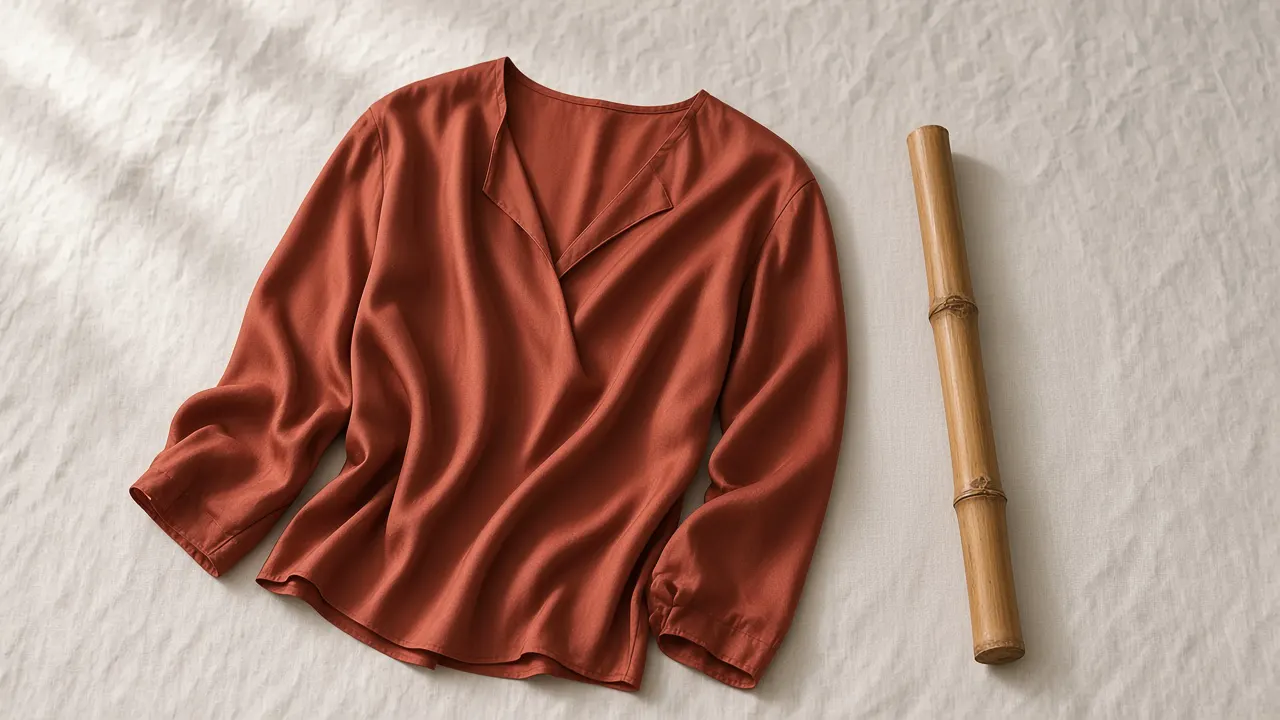
Have a flowing blouse nearby? Check a product.
The public read: Be careful
We name a public verdict and leave the internal math unpublished. The high level method is on the scoring method.
Viscose and rayon, including bamboo viscose: Be careful.
Be careful means: do not treat a plant name as a clean bill of health, and do not pretend the viscose mill is a minor detail. It is not a command to throw out a dress you love. It is the default when the label says viscose, rayon, or bamboo viscose and does not name a tighter process.
Not every wood fibre is this one
Lyocell, including TENCEL Lyocell, is Better choice. It is spun from a solvent the mill can recover. It is not viscose. Modal is Okay. Named modal such as TENCEL Modal tells you the mill, which is useful, but it is still modal. LENZING ECOVERO is still viscose, with a published wood and mill story, and its read is Okay. That page does not pull ordinary viscose up with it.
Cupro is another regenerated cellulose, made a different way. This page does not grade it. If the label says cupro, do not file it as viscose and do not file it as lyocell. Acetate is a different fibre again.
Hemp or bamboo on a tag is only the plant source until the generic name says otherwise. Bast hemp is Better choice. Hemp viscose is this page.
Badges
OEKO-TEX Standard 100 can test the finished article for harmful substances (OEKO-TEX Standard 100). That is worth reading. It does not raise a TFD health number, and it does not change viscose into lyocell. A parent focused comfort piece, including where bamboo shows up in kids’ clothes, lives in the kids’ underwear article. The fibre verdict on this page is still Be careful.
What to look for on the label
- Viscose or rayon: this process. Public read: Be careful.
- Bamboo viscose, or rayon made from bamboo: the same process. Be careful.
- Bamboo with no generic name: ask. Mass apparel is usually viscose.
- Lyocell or TENCEL Lyocell: a different process. Better choice.
- Modal: Okay, including named modal. Still modal.
- ECOVERO: branded viscose. Okay, and not a reason to upgrade all viscose.
- OEKO-TEX: a limit check, not a health number raise.
How to read a clothing label walks through the bamboo rename in shorter form.
A 60-second table
| On the label | Practical read | Public fibre language |
|---|---|---|
| Viscose, rayon | Regenerated cellulose, classic viscose mill | Be careful |
| Bamboo viscose, rayon from bamboo | Same mill family. Bamboo was the pulp | Be careful |
| Lyocell, TENCEL Lyocell | Solvent spun. Different process | Better choice |
| Modal, including TENCEL Modal | Same viscose chemistry. A name tells you the mill | Okay |
| LENZING ECOVERO | Viscose with a named mill story | Okay |
| OEKO-TEX on viscose | Substance limits on that article | Not a health number raise |
Scan a piece you already own
Paste a product URL or type the composition into Toxic Fashion Detector. A dress or a tee sold as bamboo is the label worth checking. For cleaner brand defaults, browse the brand directory.
Sources
- Regulation (EU) No 1007/2011, Annex I. Viscose is regenerated cellulose fibre obtained by the viscose process.
- 16 CFR 303.7. Generic names for manufactured fibres. Rayon is the US generic name for regenerated cellulose. Viscose may be used for the viscose process.
- US Federal Trade Commission. Bamboo textiles. Rayon made from bamboo must be labelled as rayon or viscose, not as bamboo.
- International Labour Organization encyclopaedia of occupational health and safety. Viscose (rayon), including exposure to carbon disulfide and hydrogen sulfide in the process.
- Agency for Toxic Substances and Disease Registry. Carbon disulfide ToxGuide. Viscose rayon production is named as a worker exposure setting.
- OEKO-TEX. STANDARD 100: textiles tested for harmful substances, with limit values by skin contact class.