For anyone reading a recycled claim
Recycled cotton: what the planet story does not change
Recycled cotton is usually shredded cotton spun again, often in a blend. We read it as Okay: a planet story, not a skin upgrade, and not the same as organic. Polyester in the blend is still polyester. GRS checks recycled content and processing. It does not raise a health number.
Why it matters for your body
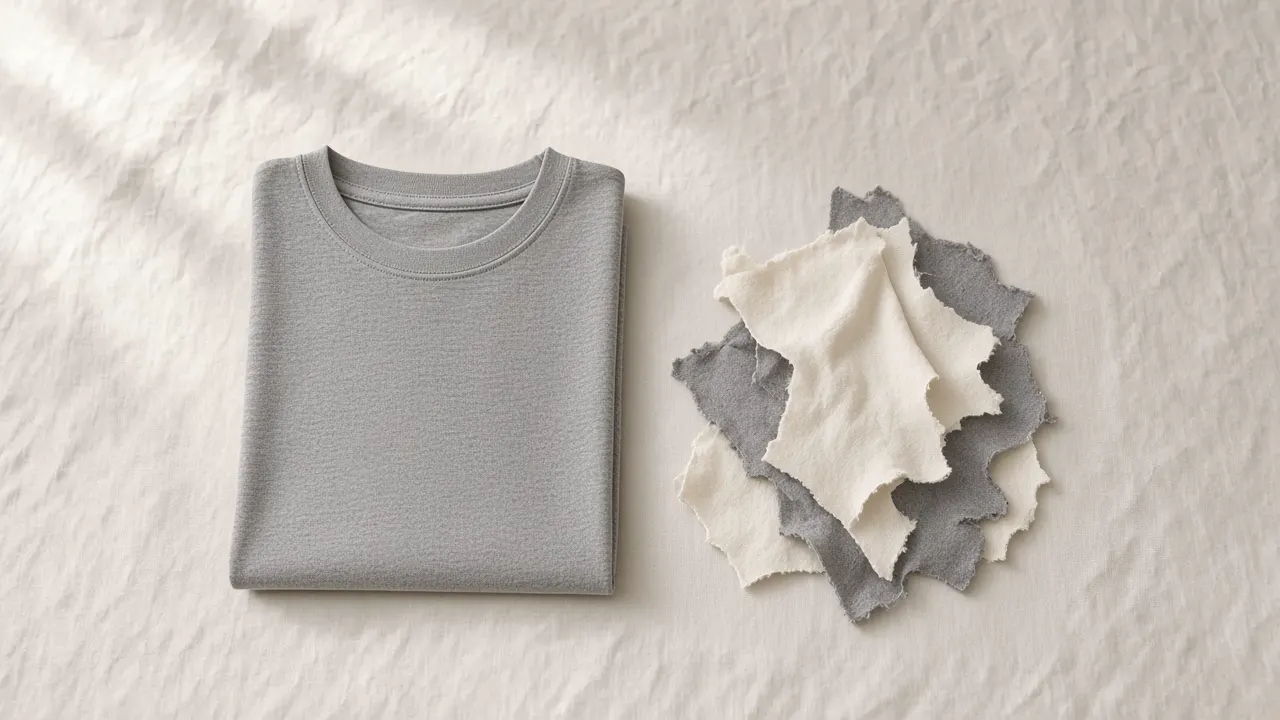
Recycled cotton is cotton that has already been a textile. Most of what you can buy is mechanical: cutoffs from a factory, or old cloth, shredded back into fibre and spun again. The fibres come out shorter than the cotton they came from. Industry guidance treats very fine yarns and “long fibre” claims on that shredded cotton as something to question, because the shredding is the point (Textile Exchange, guide to recycled inputs).
Shorter fibre is a yarn problem. Mills often blend in longer fibre so the yarn holds. That longer fibre might be virgin cotton. It might be polyester. The shirt on your skin is whichever list is on the label, not the planet sentence above it. Cotton against skin is still a breathable plant fibre. That is why this is not a plastic read. It is also why a recycled claim is not the same word as organic.
Our cotton split puts organic cotton at Better choice and conventional cotton at Okay. Recycled cotton stays with Okay. The longer version of that aside is this page.
Have a tee that says recycled cotton? Check a product.
The public read: Okay
We name a public verdict and leave the internal math unpublished. The high level method is on the scoring method.
Recycled cotton: Okay.
Okay means a reasonable everyday fibre, not a warning and not a gold star. Using less virgin cotton can be a real production win. It does not make the finished shirt safer on skin than the cotton it was made from, and it does not copy the organic farm standard. If you wanted Better choice, you are looking for organic cotton, not a recycled prefix.
The blend is the part people skip
A tee that is “mostly recycled cotton” can still be held together with polyester. That polyester line, recycled or not, is Prefer less. Elastane in the collar or the body is Prefer less as well. Planet is not skin. Read the lines one at a time.
There is a second, less common route: cotton waste pulped and spun as a regenerated cellulose. If the generic name on that cloth is viscose, rayon, or lyocell, it is those fibres, not recycled cotton in the shredded sense. Use the viscose or lyocell page. “Recycled cotton” on a normal tee almost always means the shredded fibre.
What GRS and OEKO-TEX check
The Global Recycled Standard tracks recycled content through the chain and adds environmental, social, and chemical requirements at certified sites (Textile Exchange, GRS). The lighter Recycled Claim Standard is the chain of custody without that fuller site scope. Both tell you about recycled content. Neither raises a TFD health number.
OEKO-TEX Standard 100 tests the article for harmful substances (OEKO-TEX Standard 100). That is the closer check for residues from dyes and finishes. It still does not raise a TFD health number, and it does not turn recycled cotton into organic cotton. GOTS applies to certified organic natural fibres (GOTS). A recycled claim is not an organic claim.
What to look for on the label
- Recycled cotton: shredded cotton, often blended. Public read: Okay.
- Pre consumer or post consumer: where the waste came from. Still Okay.
- Organic cotton: a different word. Better choice, on the cotton page.
- Polyester or elastane in the same list: read those lines as Prefer less.
- Recycled content that is actually viscose or lyocell: use those fibre names.
- GRS, RCS, OEKO-TEX, GOTS: chain, process, or limit checks. Not a health number raise.
How to read a clothing label if “recycled” is doing more work than the fibre list.
A 60-second table
| On the label | Practical read | Public fibre language |
|---|---|---|
| Recycled cotton | Shorter fibres, usually a blend. Planet story | Okay |
| Organic cotton | Farm standard, not the same word | Better choice |
| Conventional cotton | Virgin plant fibre, no organic claim | Okay |
| Recycled cotton with polyester | Plant fibre plus plastic | Okay, and Prefer less |
| GRS or OEKO-TEX | Recycled chain, or substance limits | Not a health number raise |
Scan a piece you already own
Paste a product URL or type the composition into Toxic Fashion Detector. Look for the polyester line before you celebrate the cotton one. For cleaner brand defaults, browse the brand directory.
Sources
- Textile Exchange. Guide to Recycled Inputs, including mechanically recycled cotton and the limits of fine yarn claims.
- Textile Exchange. Global Recycled Standard (GRS). Recycled content, plus environmental, social, and chemical requirements at certified sites.
- OEKO-TEX. STANDARD 100: textiles tested for harmful substances, with limit values by skin contact class.
- Global Organic Textile Standard. The Standard. Processing standard for certified organic natural fibres.